DC Heritage Poultry
  • Home
    • Contact
  • Standard chickens
    • Dual-Purpose Chickens
    • Laying Chickens
    • Rare Chickens
  • Bantam Chickens
    • Bantam cleaned legged
    • Bantam feathered legs
  • For Sale
  • Shipping & Care
    • Shipping Policies
    • Chick Care
  • Price List

Bantam feathered legs

Here you will find the bantam chicken with feathered legs.

click here to send us a request
Price List

Belgian d'Uccle

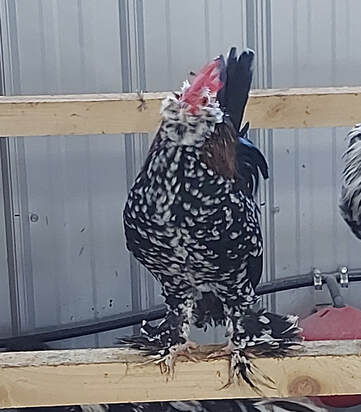
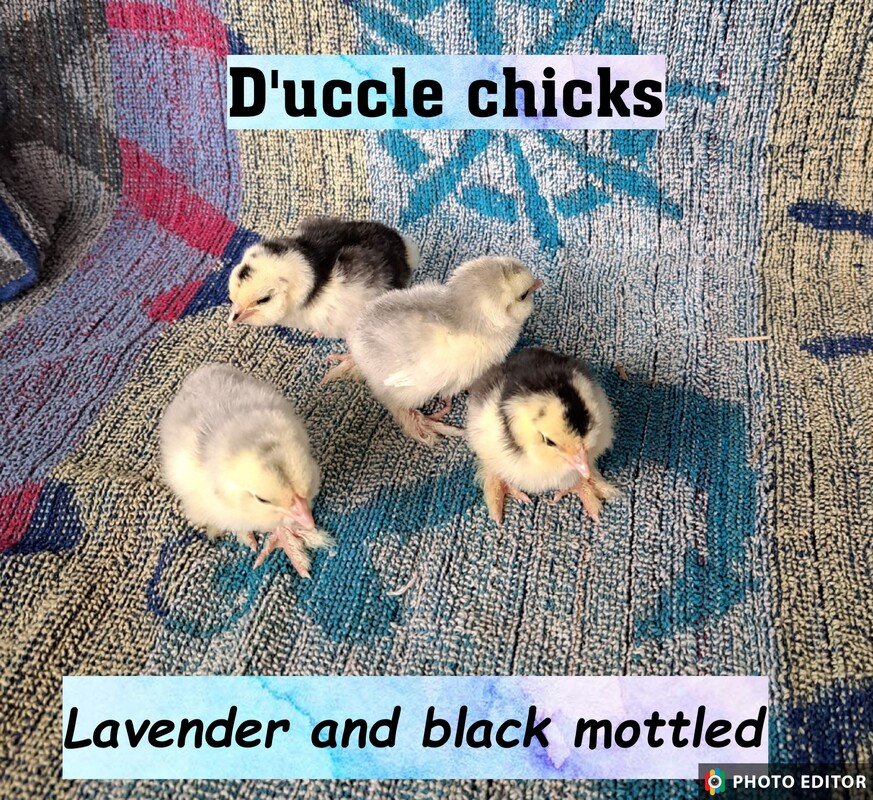
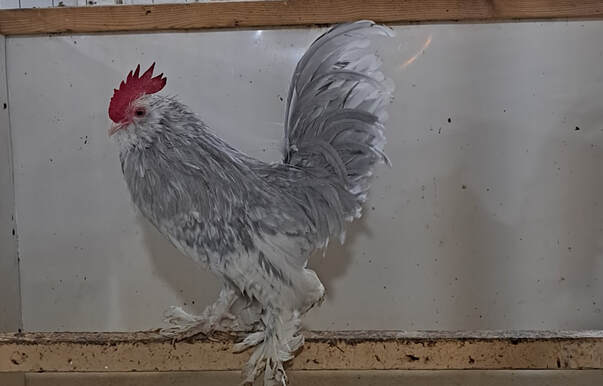
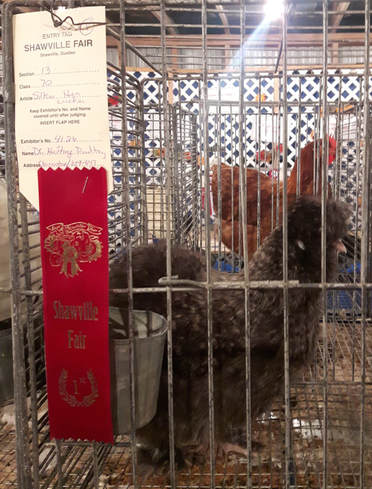
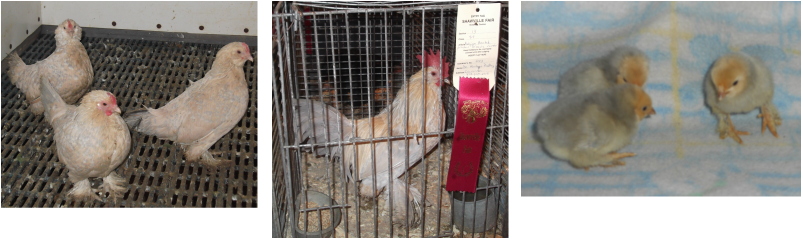
The Belgian d’Uccle was first bred in the town of Uccle on the outskirts of Brussels in central Belgium by Michael Van Gelder with the help of Robert Pauwels and Louis Vander Snickt, in the early years of the 20th century. It is a true bantam with no standard-sized large fowl counterpart and is one of 11 Belgian true bantam breeds. It is also called Barbu d’Uccle  [bearded d’Uccle ] or in Dutch Ukkelse Baardkriel. It is thought that cross breeding of the Sablepoot and Barbu D'anvers made the breed, but not know for sure. The ideal weight for the breed has different standards, 1 for the Netherlands, 1 for France. 1 for the UK and 1 for the USA, with the American standard being cocks 22 oz’s and hens 20 oz’s..  They have distinct vulture hocks, heavily feathered shanks and toes and face muffling that includes ear muffs and a full beard. Their wattles are very small or non-existent which is preferred. There are currently 28 colors listed. The first color to be accepted into the American Poultry Association in 1914 was the Mille Fleur and today a lot of people call the breed Mille fleur or Millies. They are fast maturing with first eggs being laid at around 6 months. Hens lay a small sized cream/white egg and expected to lay between 150-180 per year. They can go broody. They are typically calm and easygoing and are well suited to family settings and make good pets for children with a bit of handling. However they can be a bit flighty so an enclosed pen is ideal. They are relatively easy to care for and are quite hardy, able to tolerate a wide range of climates. The breed is on the conservation watch list:   We carry  Black mottled and Golden neck

​
Picture
Picture
Picture
Picture

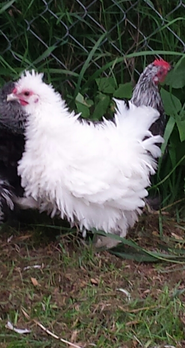
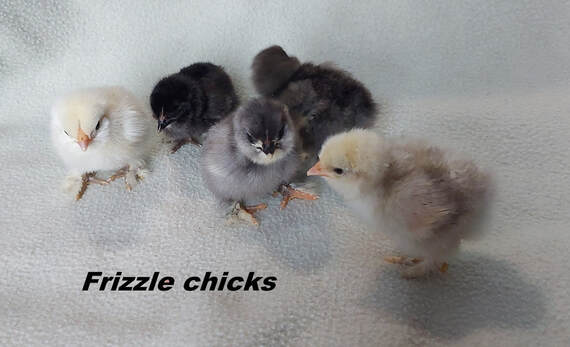
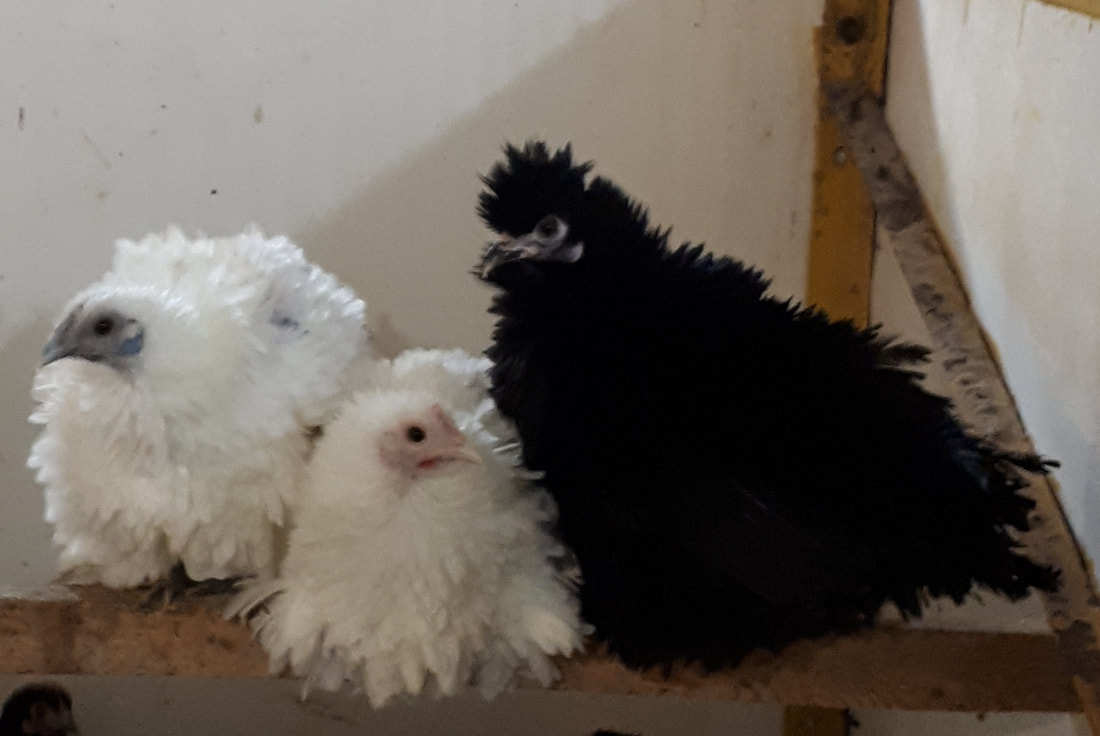
Frizzle

Picture
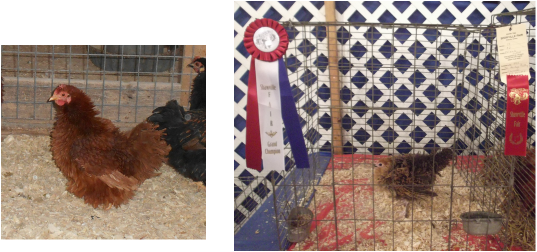
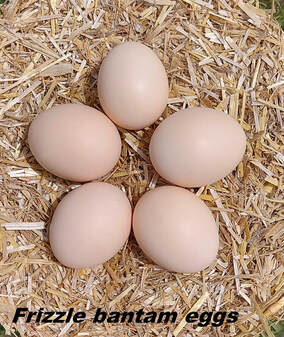
Description:They have feathers that curl outwards, rather than lying flat as in most chickens. Chickens from any breed can be crossed with the frizzled gene. They lay well and make great mothers.
​We have a sizzle rooster over the hens this year.

We call all Frizzle, Frazzle , Sizzle or any frizzle type just FRIZZLE sorry for any inconvenience this may occur.


Picture
Picture
Picture
Picture

Silkie

Picture
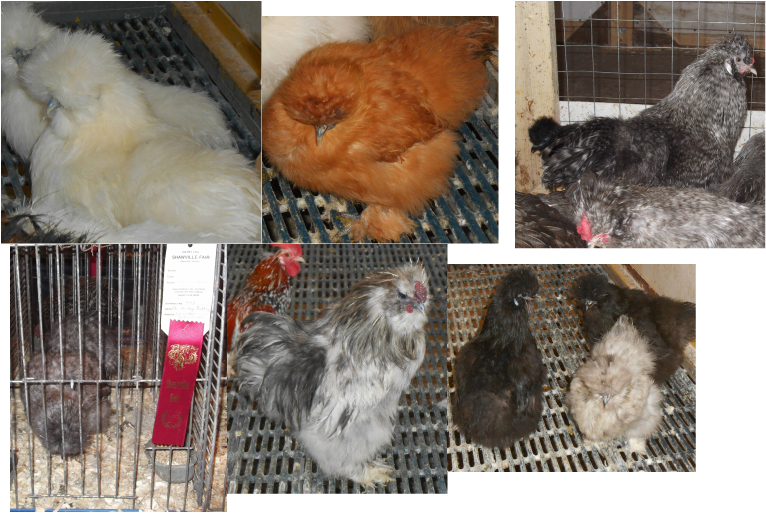
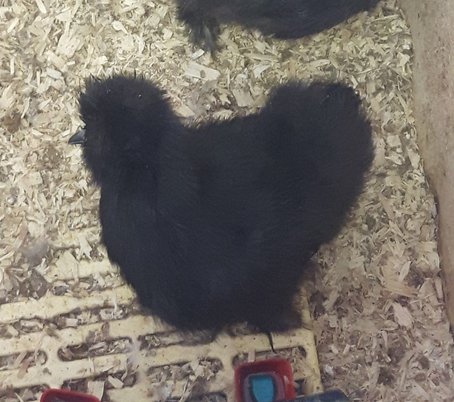
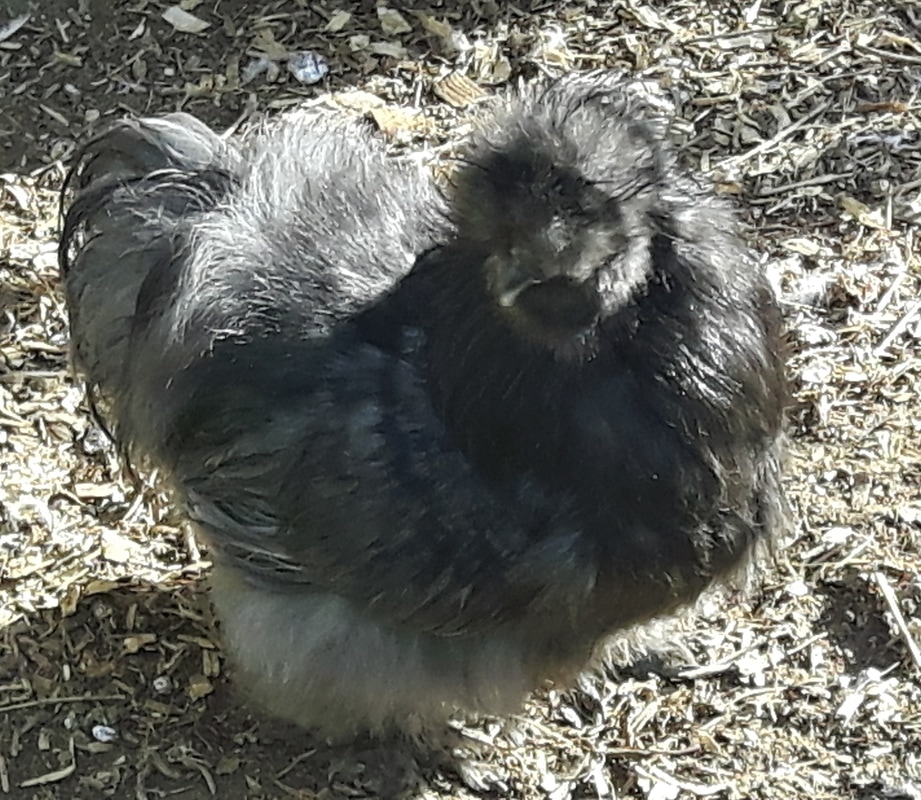
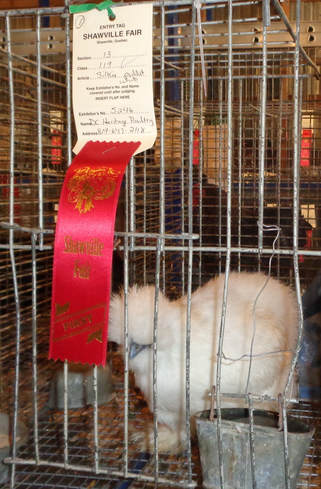
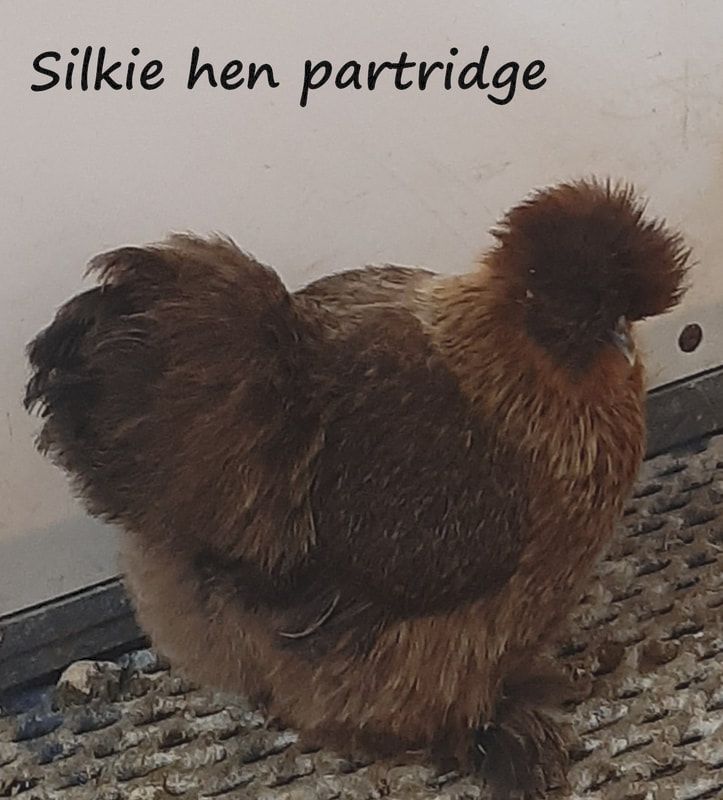
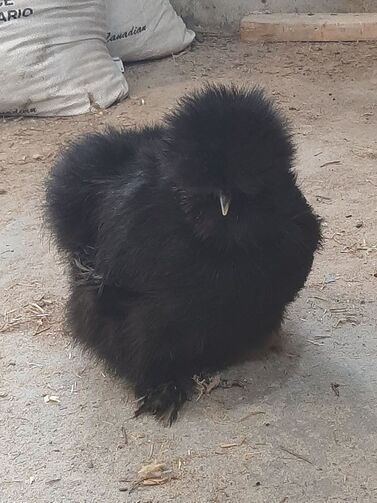
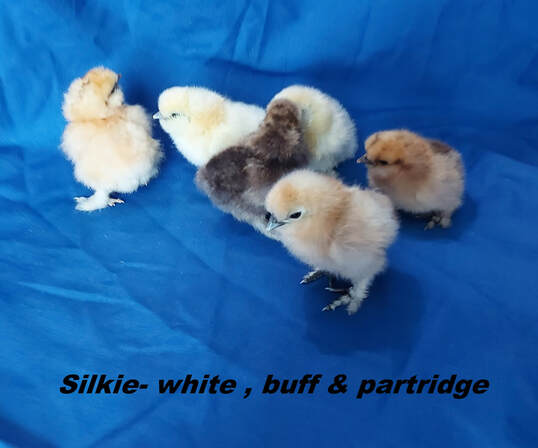
Silkie chickens originates in Asia, but the exact country of origin is debatable. Eastern cultures believed the Silkie had medicinal powers because of their black skin and bones which results from the melanotic gene making them a delicacy in some parts of the world. This trait is shared with breeds like Ayam Cemani and Svart Hona’s. The breed was first introduced to the Western cultures when Marco Polo reported seeing chickens with hair like a cat during his travels in 1298.  Silkies have a very docile manner and make excellent pets and well adapted to confinement Silkies feathers lack barbicels which are the hooks to hold the feathers in, this is what gives them their poofy look. Silkies have a fifth toes attached at the rear facing backward on each foot, which is a genetic feature called polydactyl gene. The hens lay approx. 120 small tinted eggs per year. Hens are very broody and great Moms even to adopted little ones. There are 2 sizes of Silkie’s standard cocks 4 lb, hens 3 lbs and bantam cocks 36 oz, hens 32 oz. Standards are mostly in the U.K. We like the smaller bantam size in North America. Silkies have a dark or mulberry colored walnut comb, black eyes and blue-tinted beak with turquoise ears. There are bearded and non-bearded Silkies. There are eight American Poultry Association approved colors, blue, self-blue [ Lavender ], black, buff, gray, partridge, splash and white for the bearded variety and blue, black, buff, gray, partridge and white for the non-bearded variety. There are other colors being developed Chocolate, Mottled, Cuckoo black and lemon, and cream. The breed was accepted into the APA 1874.
​We carry blue, black and splash, White, Buff, Partridge, Paint and  New for 2025 chocolate
Picture
Picture
Picture
Picture
Picture
Picture
Picture
Picture
Picture
Proudly powered by Weebly